Unclear role requirements
Development becomes inconsistent when the skills and proficiency levels expected for a role are not clearly defined.

Platform capability / Skills & Competency Development
KnowHow helps organisations define skills relevant to each role, review current capability from employee and manager perspectives, identify gaps and connect those gaps to practical development activity.
The capability challenge
When skills expectations, assessments and development actions are managed separately, managers and HR/L&D teams can struggle to see what each role requires, where the gaps are and what should happen next.
Development becomes inconsistent when the skills and proficiency levels expected for a role are not clearly defined.
Managers need a practical way to compare required capability with current capability and identify meaningful gaps.
Learning is more useful when it responds to an identified role or capability need rather than being disconnected from the requirement.
A connected skills journey
KnowHow can connect the steps used to define capability, review current proficiency, identify gaps and direct relevant development.
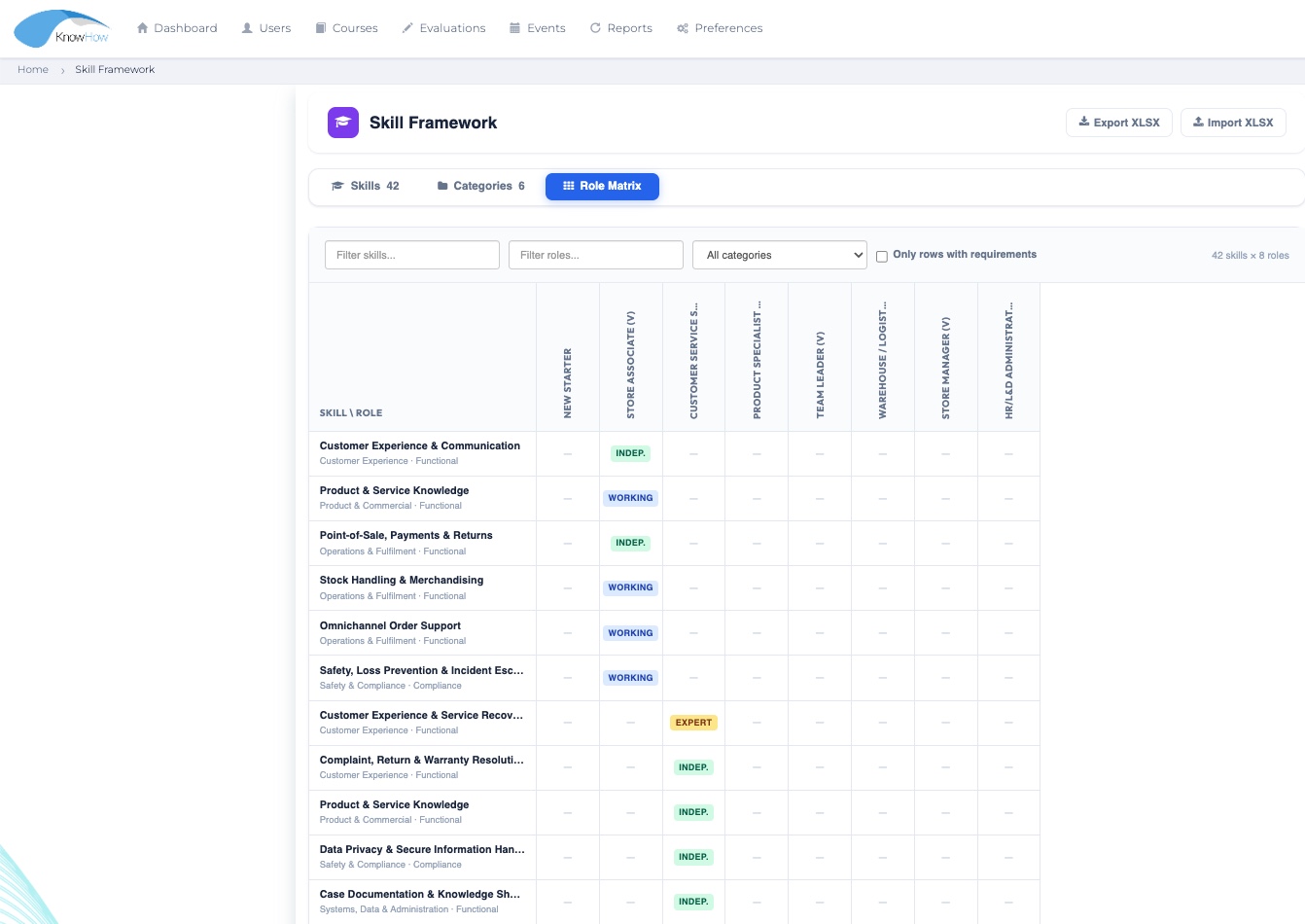
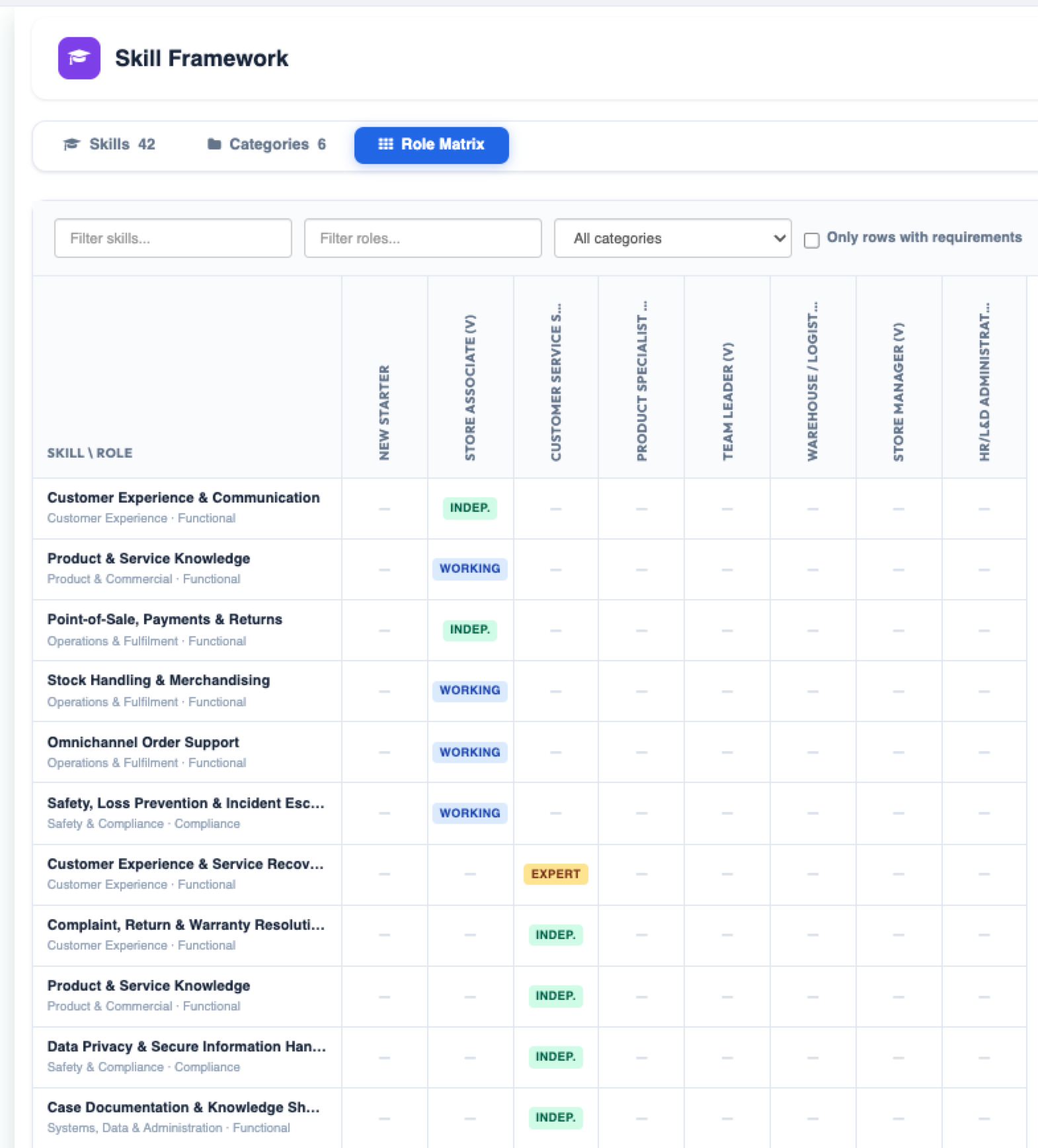
Map the skills and expected proficiency levels that matter for each role.
Assess current proficiency through the configured review process.
Compare current capability with role requirements to make gaps visible.
Agree learning, coaching, shadowing or other development actions.
Use reporting tailored to each role to see capability priorities across the organisation.
Define the framework
Skills frameworks can organise skills relevant to each role and proficiency expectations so employees, managers and HR/L&D teams have a common reference point.
Skills Development Reviews
Skills Development Reviews give employees and managers a structured way to assess capability relevant to each role, add context and make gaps visible before development is planned.
Employee inputEmployees can rate their current proficiency against the skills that matter for their role.
Manager inputManagers can provide their own assessment, helping create a more useful capability conversation.
Comments & evidenceConfigured reviews can capture supporting comments and evidence alongside ratings.
Direct developmentMove from an identified gap to an agreed development action and follow-up.
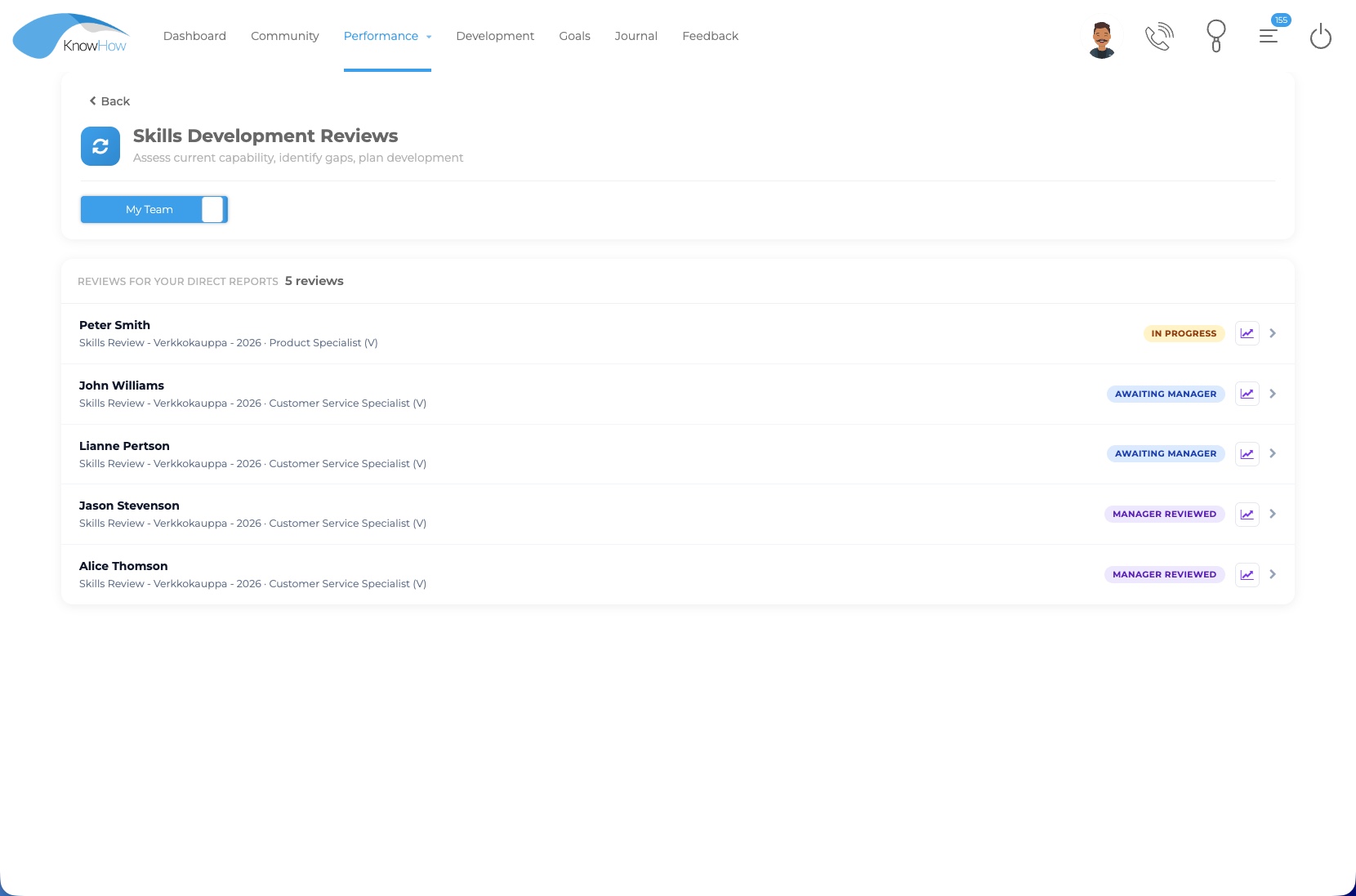
Assess capability with context
KnowHow can support a richer capability review by combining the role requirement with employee and manager input, supporting context and the priority of the skill itself.
Capture the employee’s view of current proficiency against the role requirement.
Add the manager’s perspective to support a clearer and more constructive development conversation.
Use configured comments or supporting evidence to add context behind the rating where required.
Reflect which skills matter most for the role so development priorities can be interpreted in context.
Gap analysis & development planning
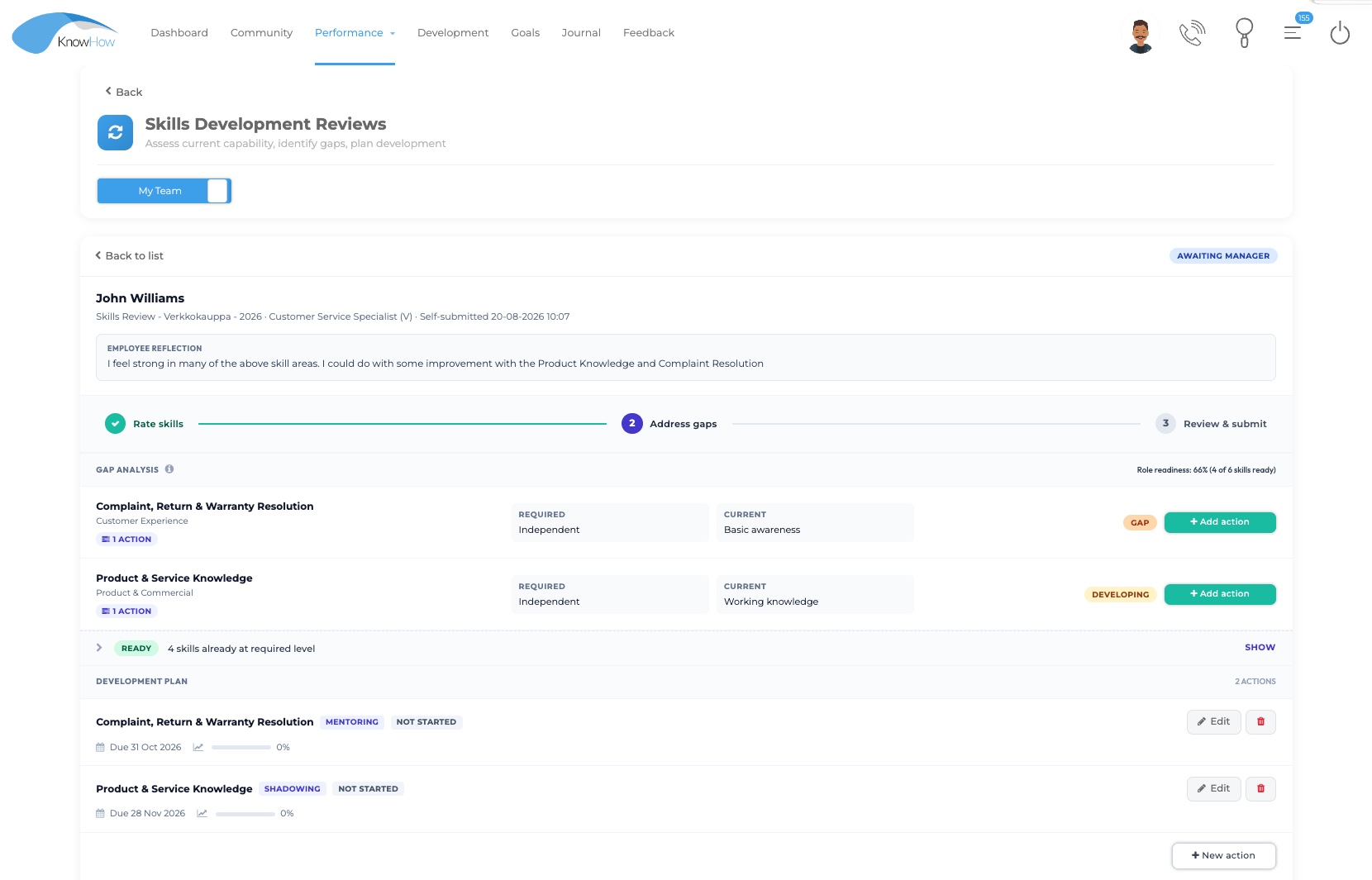
The review can make gaps explicit and support a development plan containing the actions agreed to address them. Development is not limited to courses: the intervention can reflect the most appropriate way to build the capability.
Understand the level expected for the role and the employee’s current proficiency.
Add a relevant development action where capability needs strengthening.
Keep planned activity and progress visible for follow-up.
Skills insight
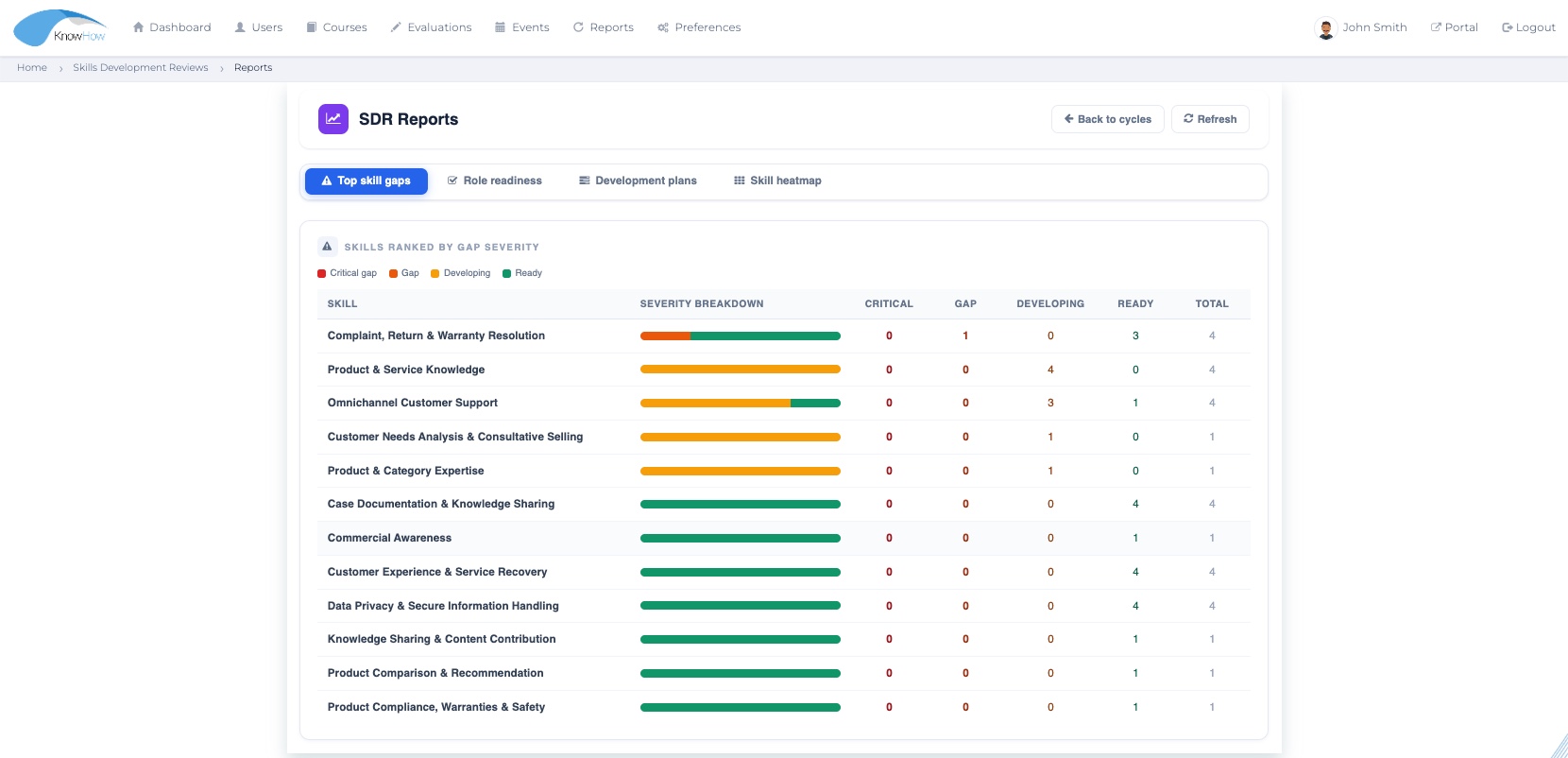
Role-relevant reporting can help HR/L&D teams understand where capability gaps are concentrated and which development priorities may require attention.
See review participation and status across the configured Skills Development process.
Surface skill-gap trends that can inform more targeted development planning.
Connect the insight back to the actions employees and managers are taking.
Interpret capability needs by role and across the wider organisation.
Configured around your capability model
Skills & Competency Development can be configured around role structures, proficiency expectations, assessment inputs, development activity and reporting requirements.
Map the skills and expected capability levels that apply to each role.
Organise related skills into frameworks that make sense for the organisation.
Define the progression used to distinguish different levels of capability.
Reflect the relative importance of particular skills or requirements where the capability model needs it.
Configure the perspectives used to assess current capability through the review process.
Capture supporting context alongside ratings where the configured process requires it.
Link gaps to learning, coaching, mentoring, job shadowing, Training Goals or other agreed activity.
Support review timing, carry-over and visibility across gap and development reporting.
Skills in context
Skills Development can operate as a structured capability process while the wider KnowHow platform helps connect capability needs to learning, performance conversations, Training Goals, career-development context and organisational visibility.
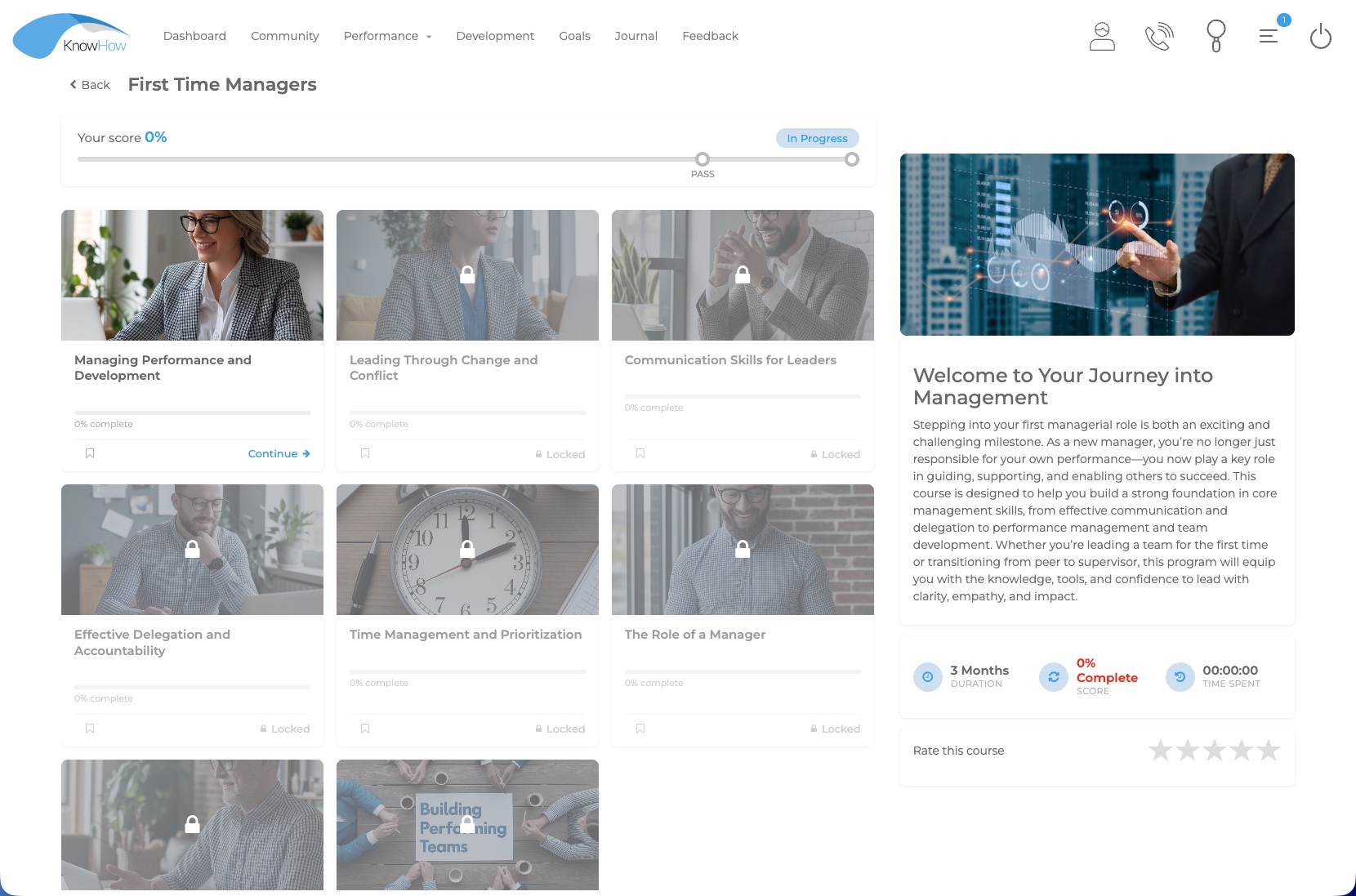
LEARN
Direct relevant learning towards a capability or development need.
Explore Learning →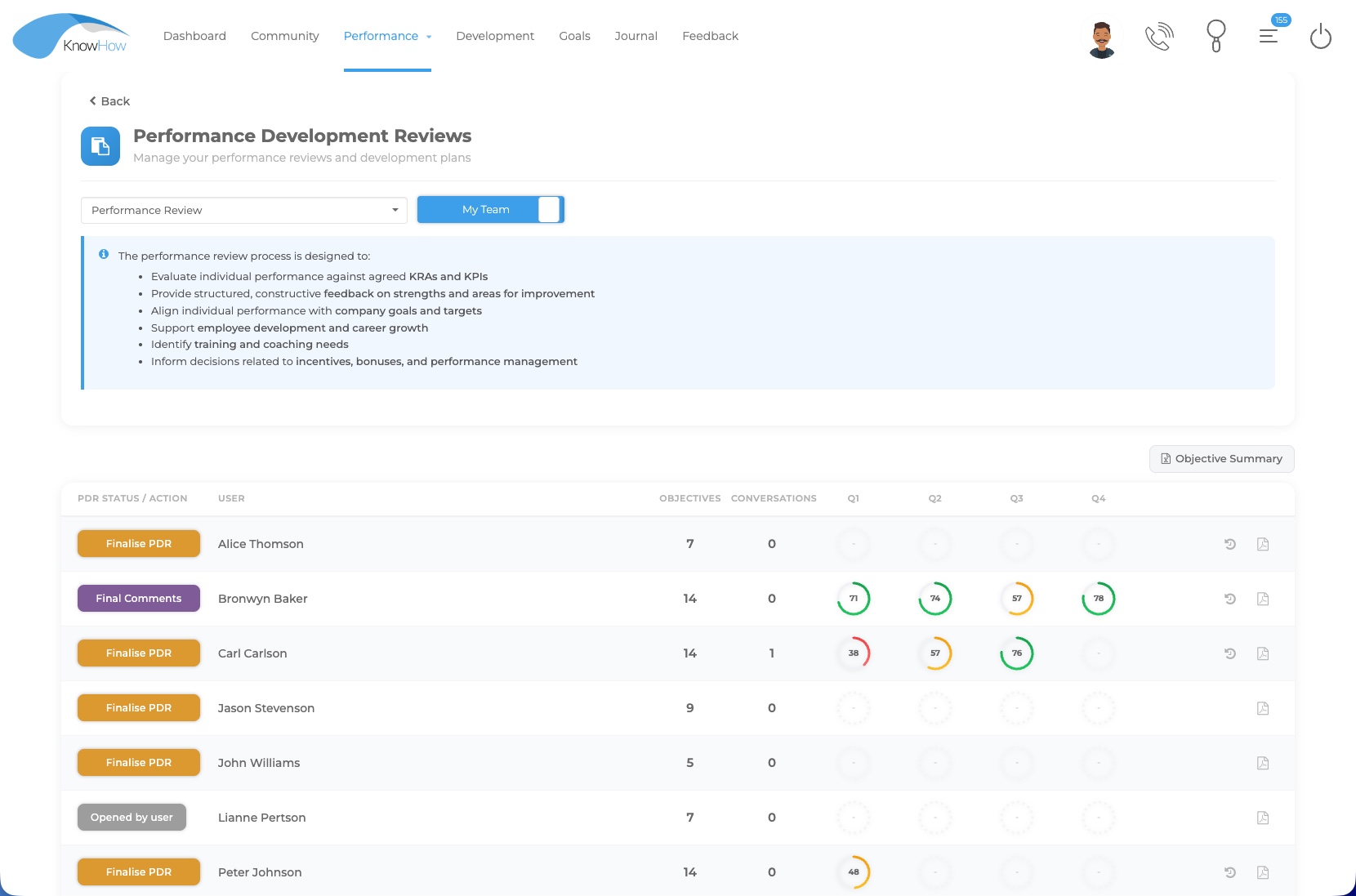
PERFORM
Bring capability and development priorities into the wider performance conversation.
Explore Performance →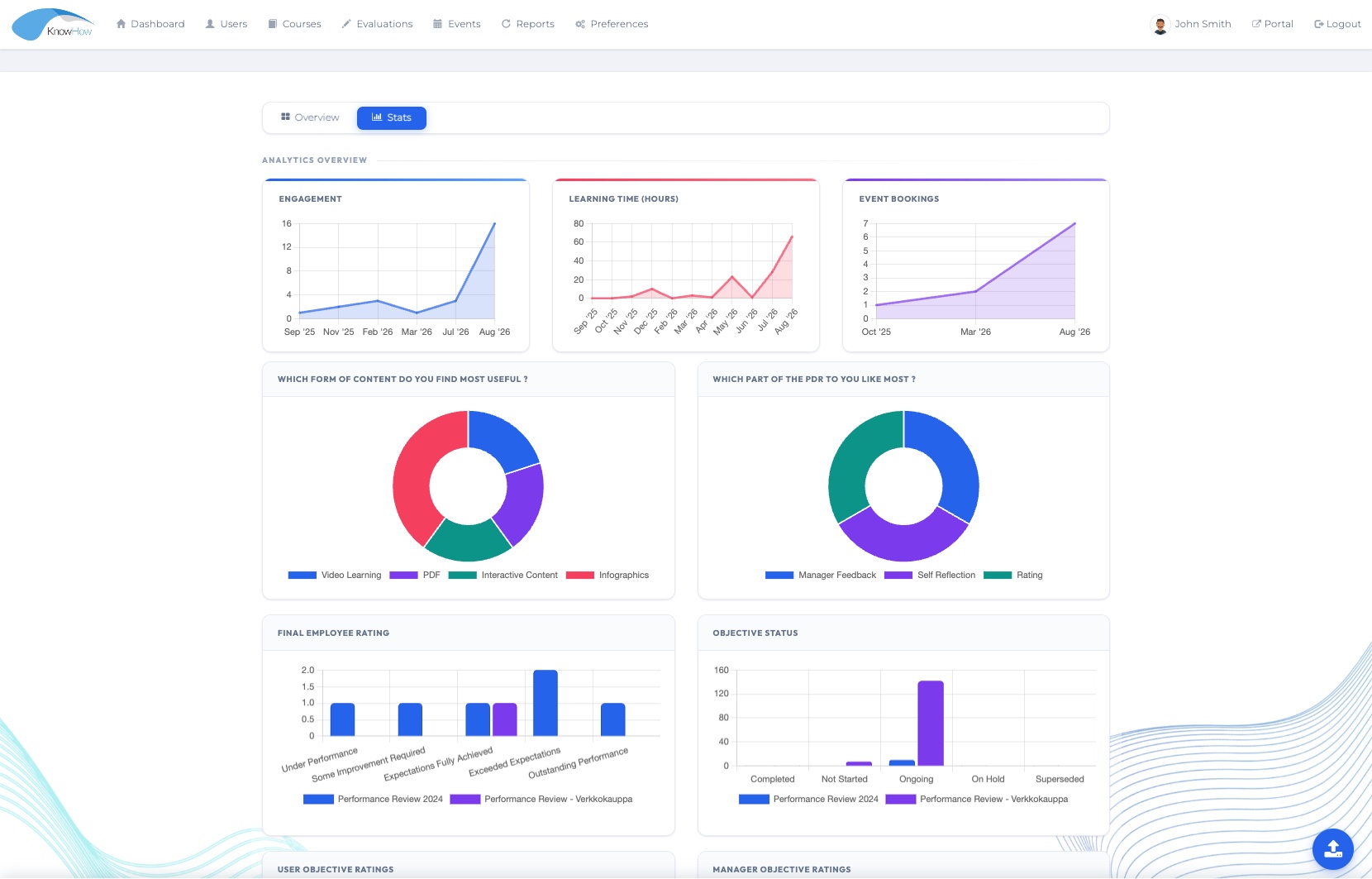
UNDERSTAND
See development activity and capability priorities in broader organisational context.
Explore Insight →Designed for practical capability development
See Skills & Competency Development in your context
We’ll tailor the conversation around your skills framework, proficiency levels, review process, development planning and reporting requirements.